



-
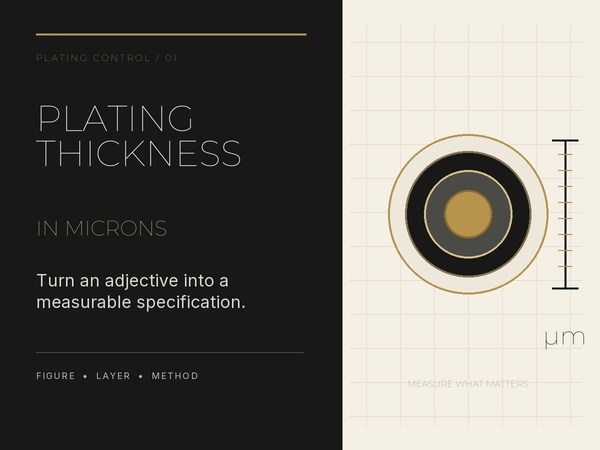
Plating Thickness in Microns: Why "Thick Gold Plated" Is Not a Specifi...
"Thick gold plated" is not a specification. Learn the three details that make plating thickness measurable and supplier quotes comparable....
See More
-
Which Jewelry Test Report Actually Matters? A Buyer‘s Guide to Anchor...
Ask three suppliers for compliance documents and you get three different stacks. None answers the real question: where are you selling?...
See More
-
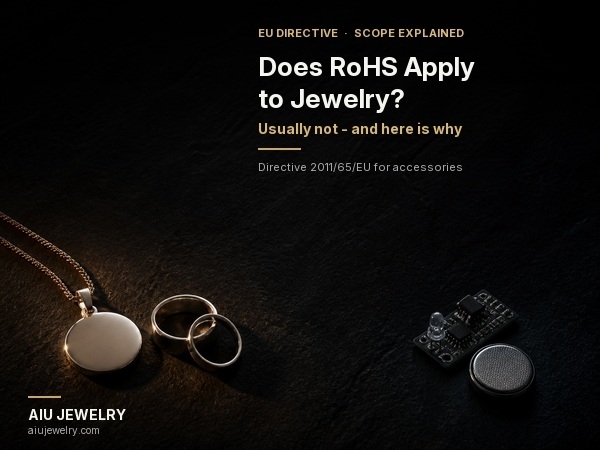
Does RoHS Apply to Jewelry? Understanding Directive 2011/65/EU for Fa...
A plain silver ring is outside RoHS scope. Add an LED and it becomes electrical equipment. One question decides which side of the line your product sits on....
See More
-
What Is a Certificate of Compliance? How a COC Differs from a Test Re...
A test report carries data. A COC carries a conclusion. Buyers who accept the wrong one cannot prove anything when a retailer audits the compliance file....
See More
-
Children‘s Jewelry Compliance: CPSIA Testing, ASTM F2923 and Wha...
CPSC eFiling became mandatory on 8 July 2026. What children‘s jewelry must be tested for, what a test panel costs, and why only the importer can issue the CPC....
See More
-
California Prop 65 for Jewelry Sellers: Lead, Cadmium and the Warning La...
Prop 65 is a warning-label law. A separate California statute sets the lead and cadmium limits that decide whether jewelry can be sold in the state at all....
See More
-
REACH Annex XVII for Jewelry: What Entries 23, 27 and 63 Actually ...
Three Annex XVII entries apply to jewelry: cadmium, nickel and lead. The actual limits, the content-vs-release distinction, and where UK REACH diverges....
See More
-
What Is AnchorCert Pro 2? The Jewelry-Specific Allergen Testing Progr...
AnchorCert Pro screens 16 metals linked to contact dermatitis, not just nickel. What the programme covers, who runs it, and how it sits alongside REACH....
See More
 anya907888